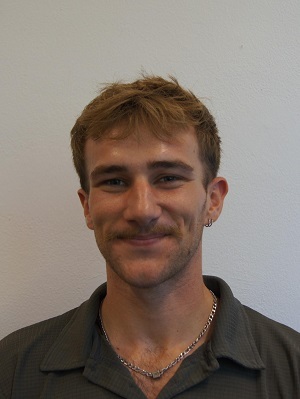
Research Spotlight: Christian Bauer
Welcome to our new series where we feature our researchers in the RTG! To show and celebrate the people behind the science, we are shining a spotlight on the brilliant minds of our Research Training Group and sharing their research, their motivations, and what drives them to explore the fascinating world of emotional learning and memory.
Who are you, how long have you been part of the RTG, and what are you working on?
Hello! I joined the RTG here in Hamburg just over a year ago when I started my PhD. This is my second time back in Germany after living in the Netherlands for a few years and I am Irish despite my name! I work with Prof. Jan Haaker in the Neuropharmacology lab where we combine behavioural and neuroimaging methods with pharmacology in order to try understand our cognitive processes a little better. My specific focus is how we respond to threats and how certain actions and contexts can differentially affect our learning and memory. For example, how the distance of a threat can bias our responses to either freeze or flight and how this bias can later show up in our memory of events.
What fascinates you most about your research question?
Every day we wake up and are faced with many decisions (such as getting out of bed or not!) and we hope to make the best decisions possible. What goes into decision-making processes are experiences we have learned and encountered in everyday life. We try to remember what actions or inactions lead to a positive or negative outcome and then we adjust our behaviour accordingly.
My research question attempts to understand some of the complicated but super important processes that we are faced with on a daily basis. The fact that my work is so tightly coupled to my own and everybody else’s life experiences makes this a really fascinating and rewarding line of work. And even if we don’t find out all the answers , we’ll still learn something useful about our human experience and this will always be a worthwhile and fascinating endeavor for me!
Can you describe a moment in your scientific journey that changed how you think about your work?
During my master thesis I worked on avoidance biases, which is the phenomenon where we tend to avoid approaching people, places or things that might result in some negative outcome. However, humans are complicated and there are times when we need to approach something potentially harmful or dangerous in order to prevent even worse outcomes from happening. Researching this topic was a big moment for me as I had a bad experience with a previous supervisor. I had started to learn avoidance behaviours in scientific settings which ultimately negatively impacted my scientific career further. I needed to learn to overcome my own biases to start approaching colleagues and professors to get help from them. This was hard to do but with the knowledge from my own work in avoidance biases , I started to overcome this problem step-by-step!
What do people often misunderstand or overlook about the topic you are working on?
People are often surprised by how aversive memories can be so strong and how they can persist in the brain for so long. But making connections is an essential process for survival and the brain has developed a way to easily wire stimuli and outcomes together in order remember what things to avoid doing in the future. Our memory is particularly sensitive to aversive events inflicted through pain or fearful threats as it is such a vital process for survival. However, just as connections can be made quickly and easily, it’s also possible to make new connections that are positive and can compete with the bad ones. This line of research has led to successful therapeutic improvements in mental health through methods like exposure therapy and cognitive behavioral therapy which are simple strategies that tend to be overlooked when looking to solve mental health problems in our society.
What advice would you give to someone just starting out in research?
I don’t have much advice myself yet but I can share advice given to me at the start of my journey from a professor at a very high level who I looked up to a lot. When I shared how I was overwhelmed about how there is constantly so much to learn all the time and the forever feeling that I’ll never be on top of things, she said that we will always be learning and that we never stop being students. This surprised me as I thought that professors may by that point know a lot and might feel on top of things. However, even top professors are always learning and I guess that’s what I like about this career, we never stop trying to understand new techniques and methods better and I think this is actually a very useful asset to have in an ever-changing world!